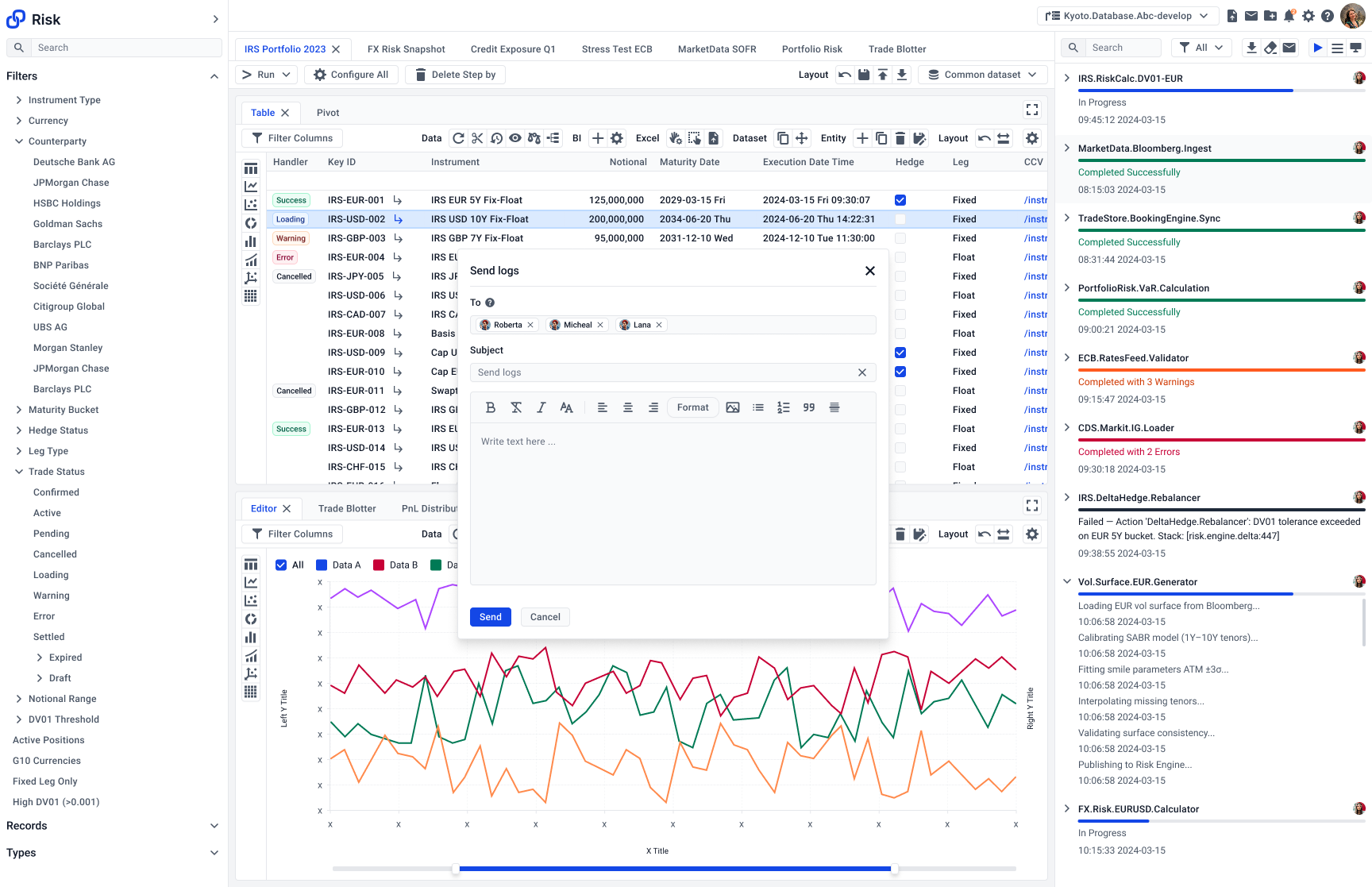
Risk Managers & Quants
Daily task
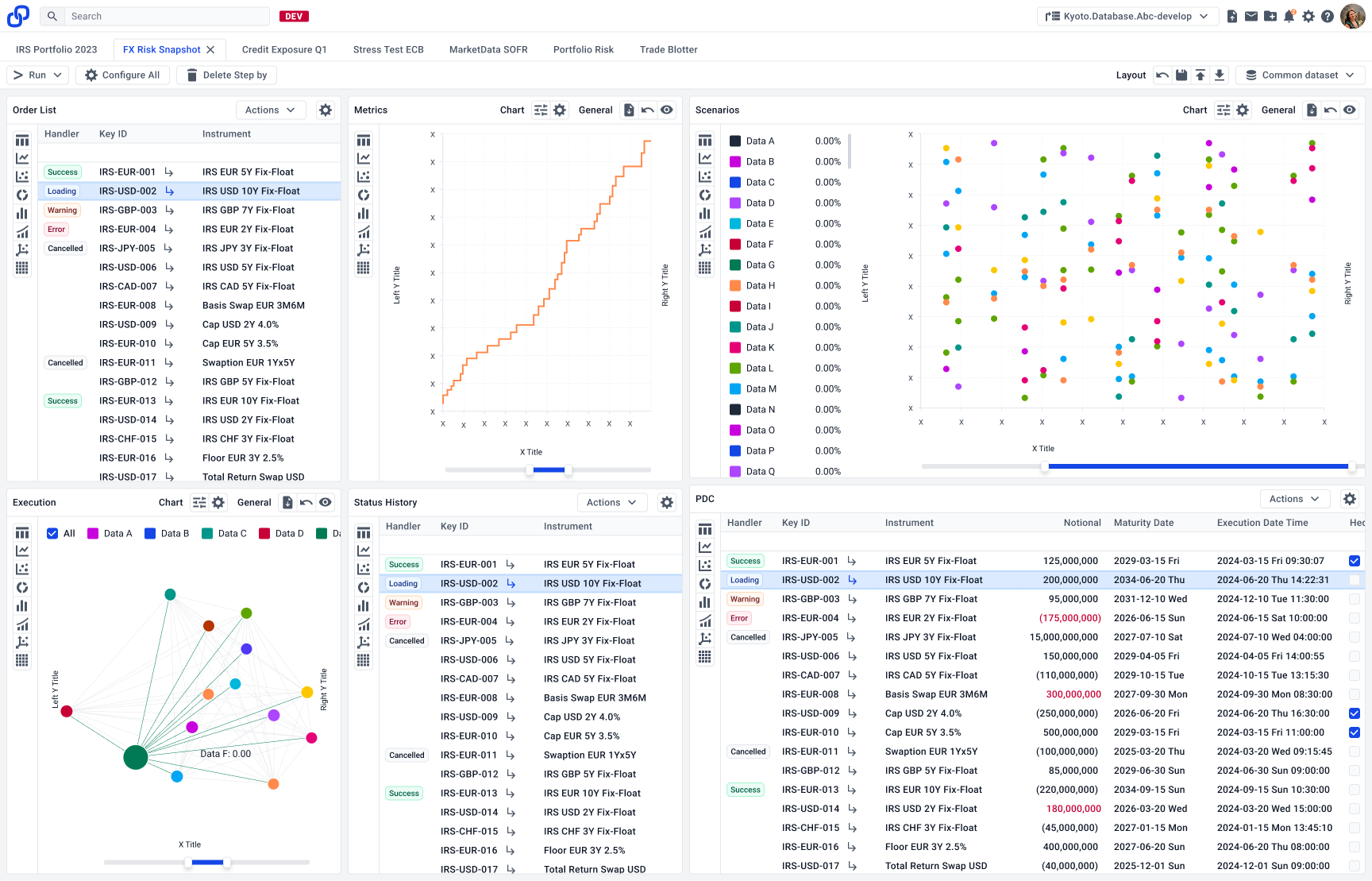
Monitor live market exposure and drill into transaction-level detail across trading desks.
Needs raw density. Full data on demand, zero cognitive overhead.
Six years as Founding Lead Product Designer on Compatibl — a financial risk platform serving Central Banks, G15 derivatives dealers, and global asset managers. I led product design across three high-stakes user segments, shipping 30+ enterprise deployments where design defensibility mattered as much as design quality.
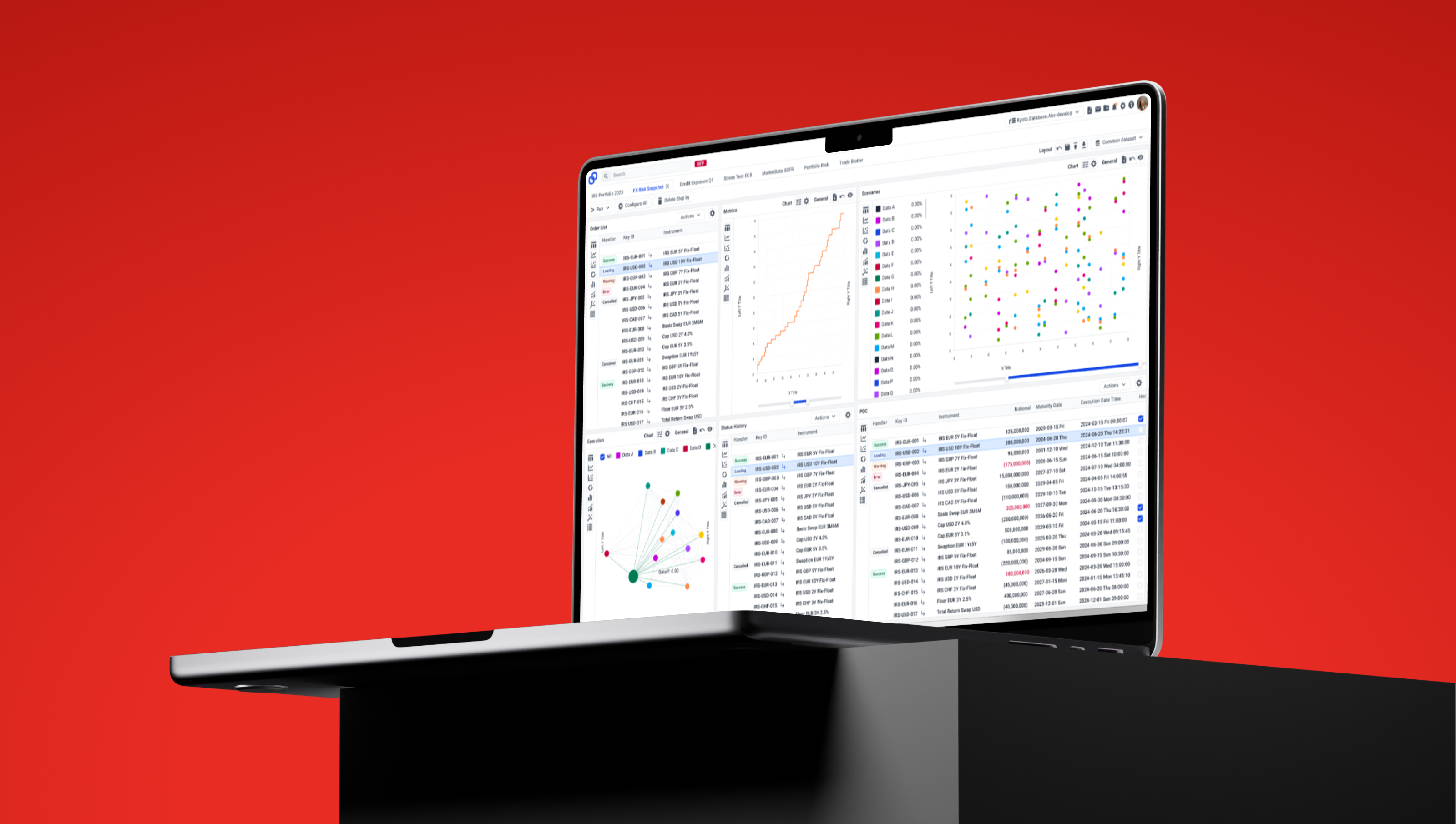
A white-label financial risk platform serving Central Banks, G15 derivatives dealers, and global asset managers. Every deployment was a fully branded, client-specific product — built on the same underlying system.
Three user types, three workflows, one non-negotiable shared requirement: zero tolerance for error in high-stakes decisions.
Monitor live market exposure and drill into transaction-level detail across trading desks.
Needs raw density. Full data on demand, zero cognitive overhead.
Synthesise market positions and execute daily strategy across diverse asset classes.
Needs synthesis. Fast pattern recognition across large data sets.
Audit transaction trails and enforce regulatory workflows across all deployments.
Needs auditability. Reproducible views, zero ambiguity.
Three user segments pulling the platform in different directions. One shared, non-negotiable constraint that unites them.
Every design decision on this platform had to serve all three workflows without compromising any of them — and hold up under regulatory audit.
A Quant needs raw density, a Portfolio Manager needs synthesis, a Compliance Officer needs auditability. The same screen has to serve all three without compromise.
Unique regulatory context, branding, and workflow requirements. Custom-building for each one wasn't sustainable.
A mislabelled column, an ambiguous state, a delayed refresh can trigger real-world financial consequences. Design has to be defensible under audit.
A repeatable four-step approach applied across every deployment — from user segment discovery through cross-functional delivery.
The same working framework whether the client was a Central Bank navigating regulatory compliance, or a G15 dealer optimising real-time trading workflows.
Direct interviews and workflow observation across three user segments. Every design decision traceable to a specific user need.
Every client request had to fit an existing component or become a universal one. Client-specific screens stopped existing.
Custom-built analytical tools designed for expert users. Progressive disclosure by default, full density on demand.
Direct collaboration with CEO, C-level, and 10+ engineering units. Every architectural decision made with engineering in the room.
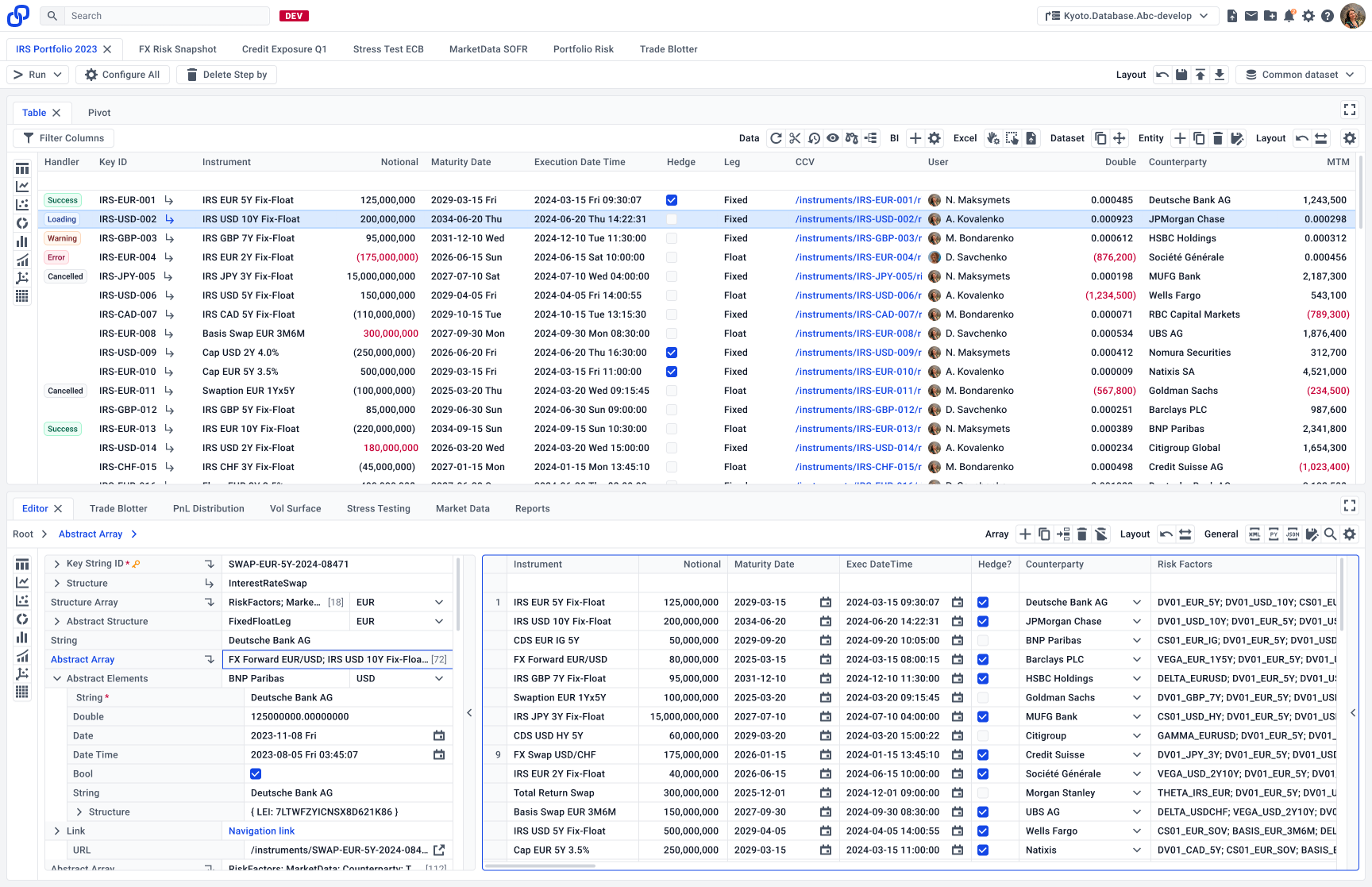
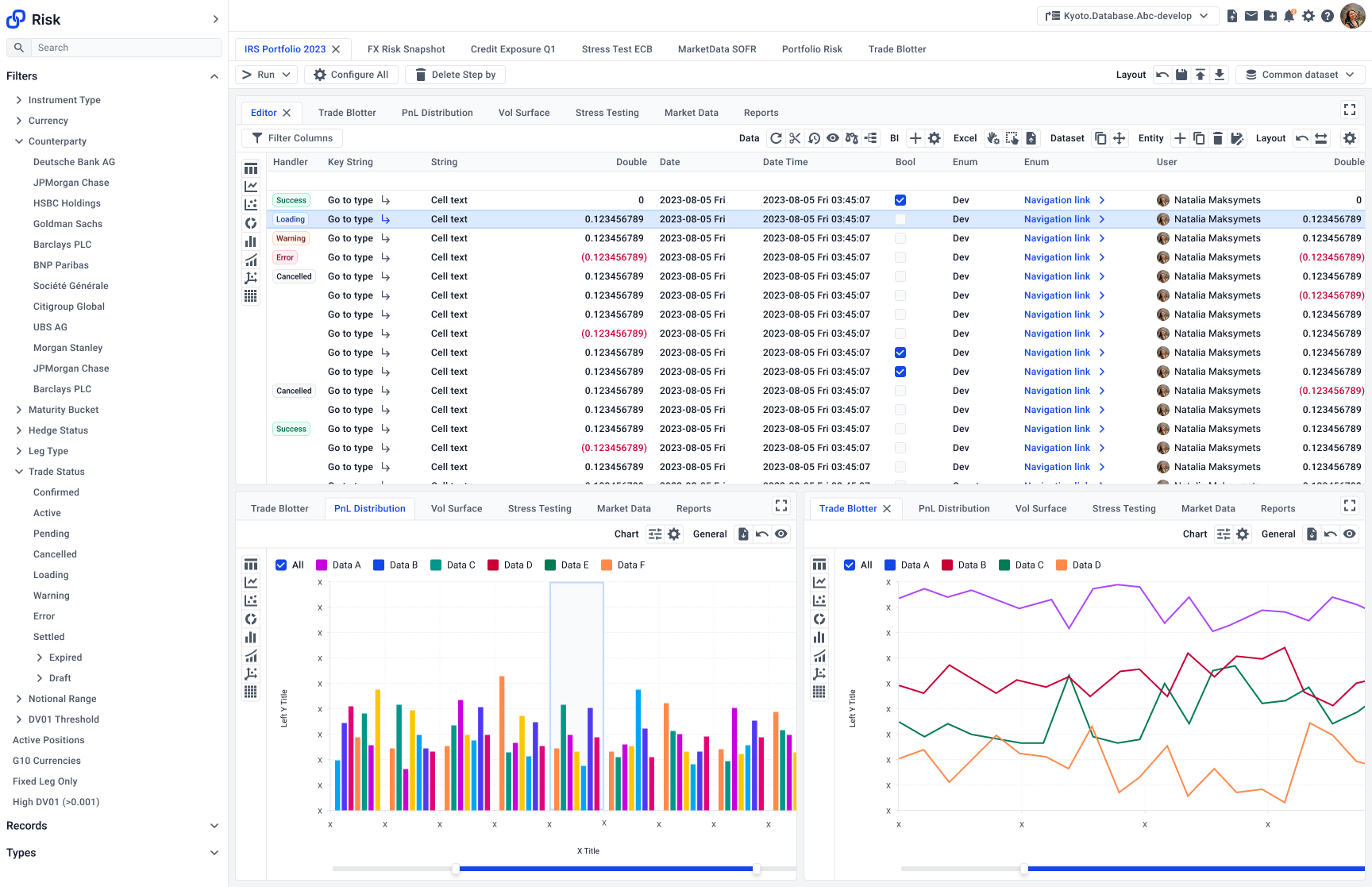
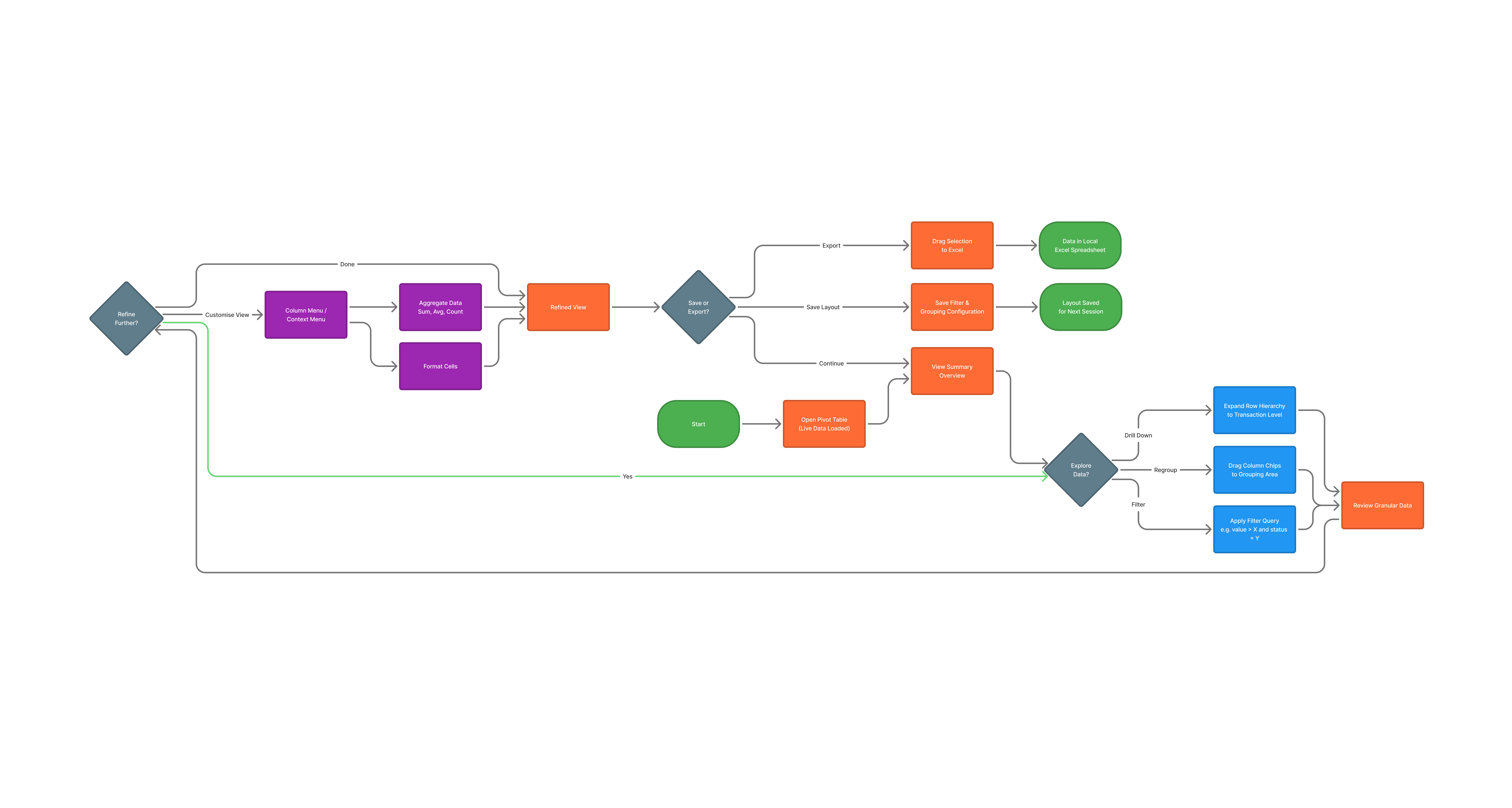
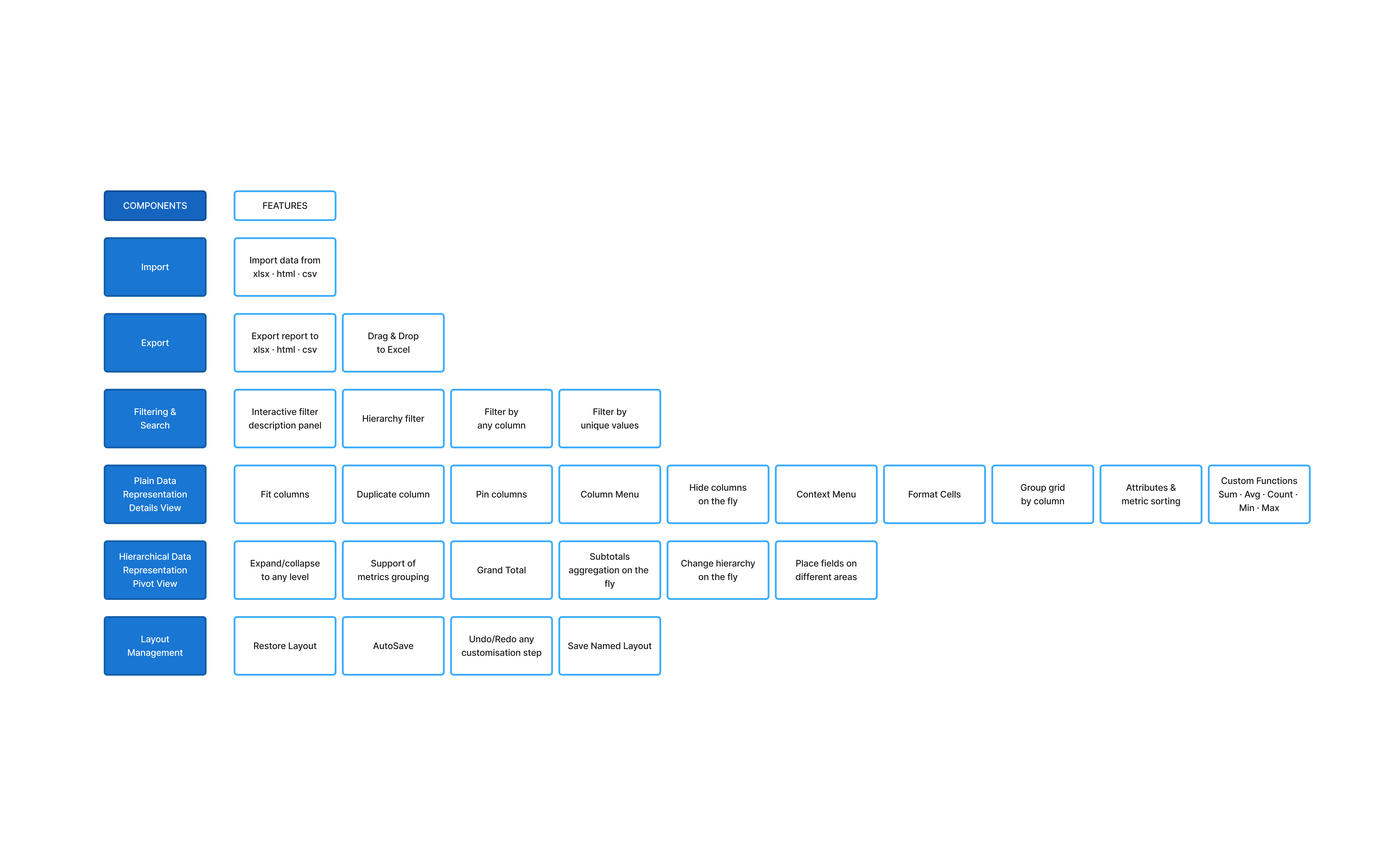
Analysts were operating in a fragmented loop — export data to Excel, manipulate it manually, rebuild filter configurations from scratch every session. The existing table was built by developers using a third-party framework. It failed under exactly the conditions financial professionals used it: complex filtering, multi-level grouping, real-time updates.
Each user segment wanted a table tool tailored to their workflow.
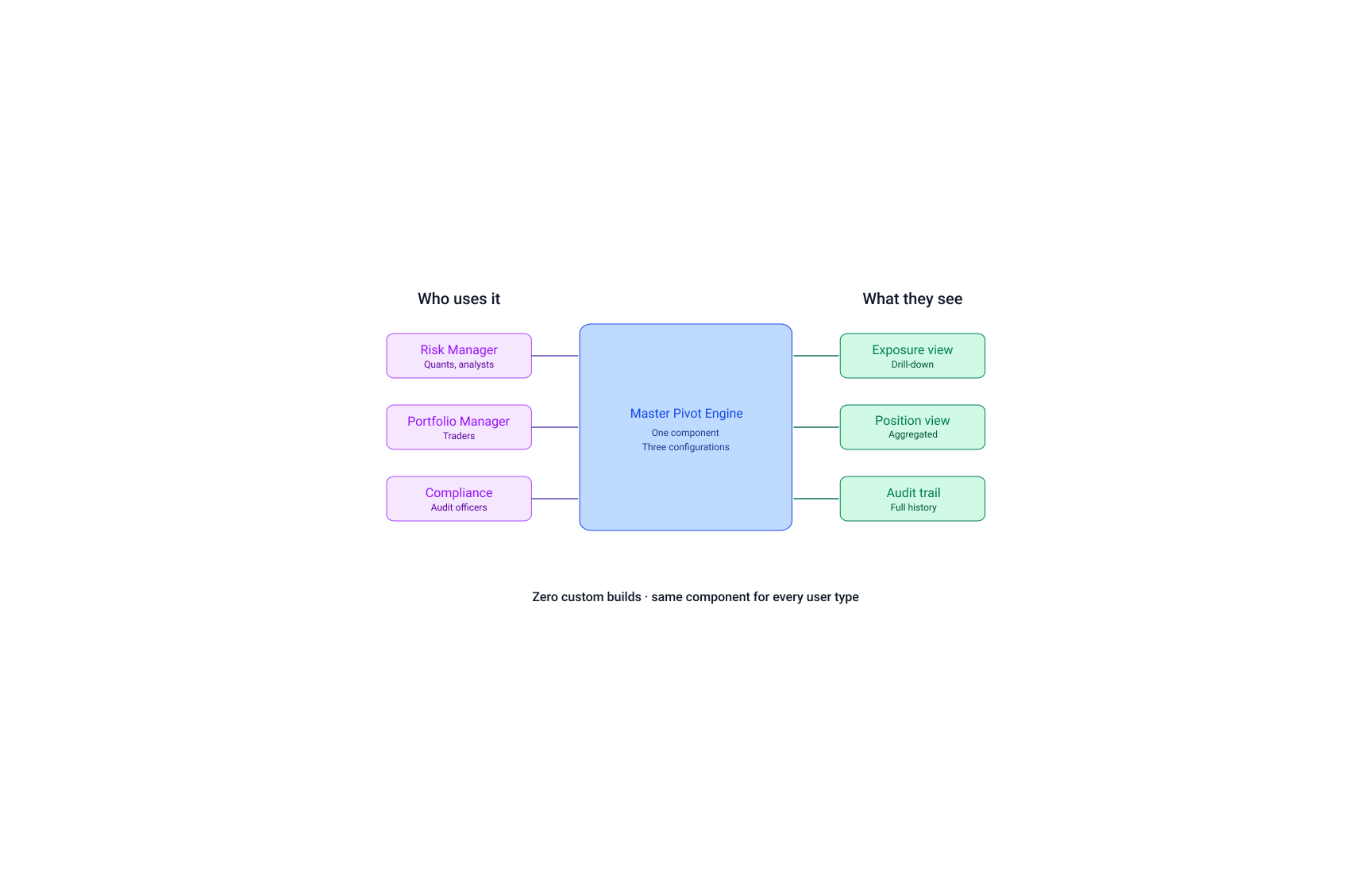
Build one "Master Engine" that every segment configures independently.
Custom per team meant three codebases to maintain. One configurable engine served Risk Managers drilling into transaction-level exposure, Portfolio Managers synthesising market positions, and Compliance Officers auditing data trails — with zero custom builds.
One analyst quote, matched by consistent feedback across sessions.
Saved layouts + drag-to-Excel removed the daily rebuild cycle.
Became the analytical engine at the centre of the platform.
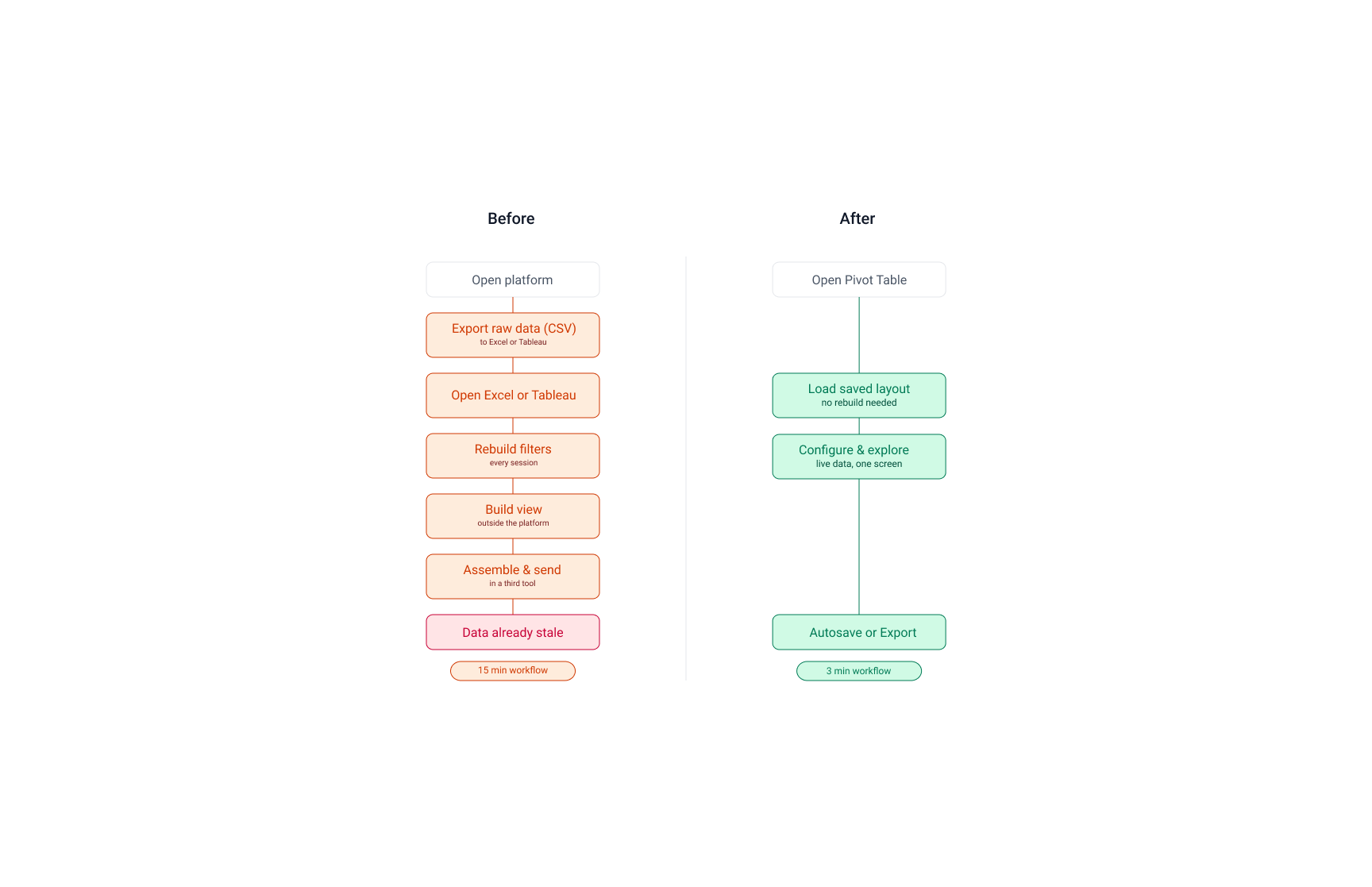

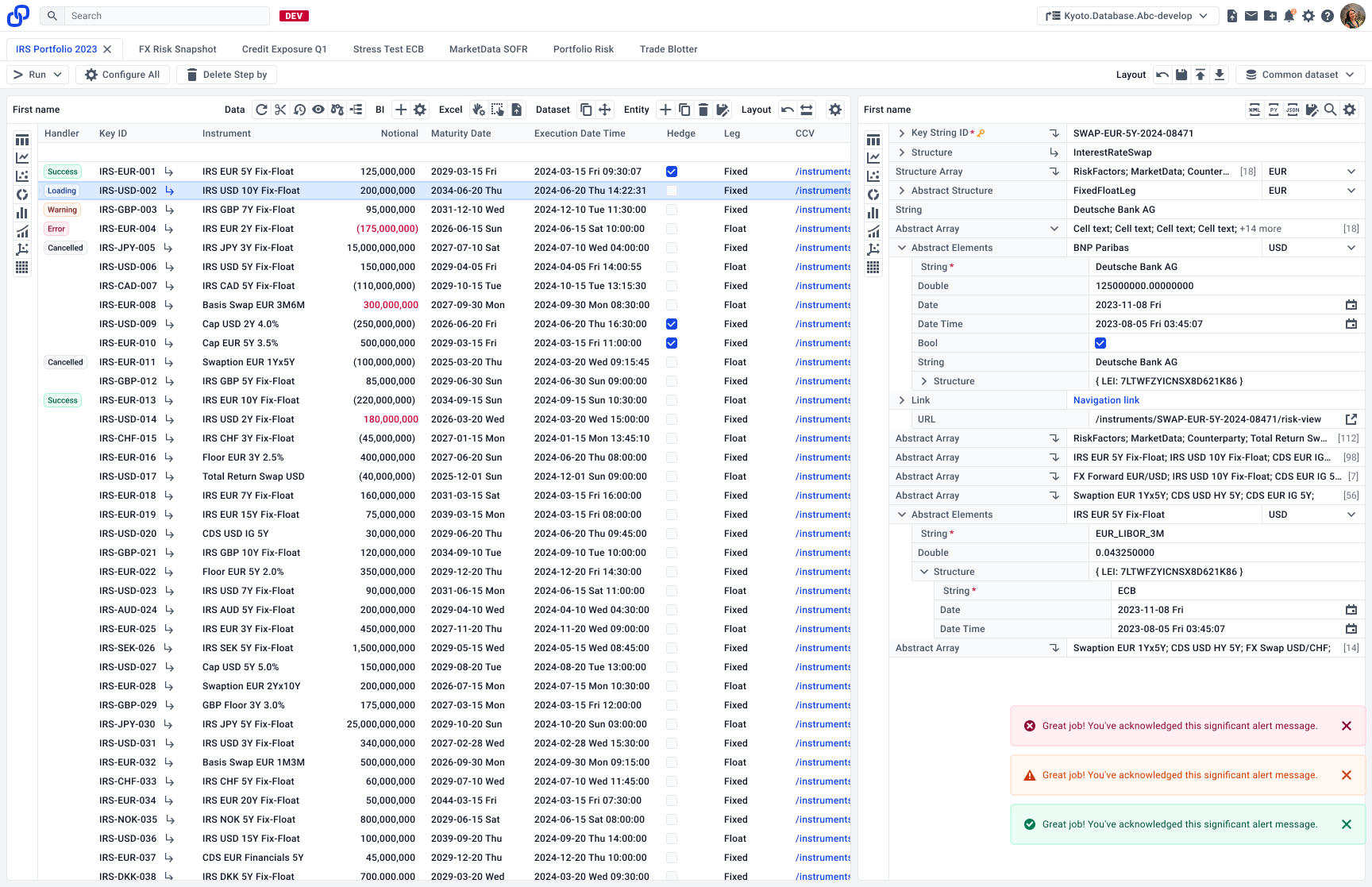
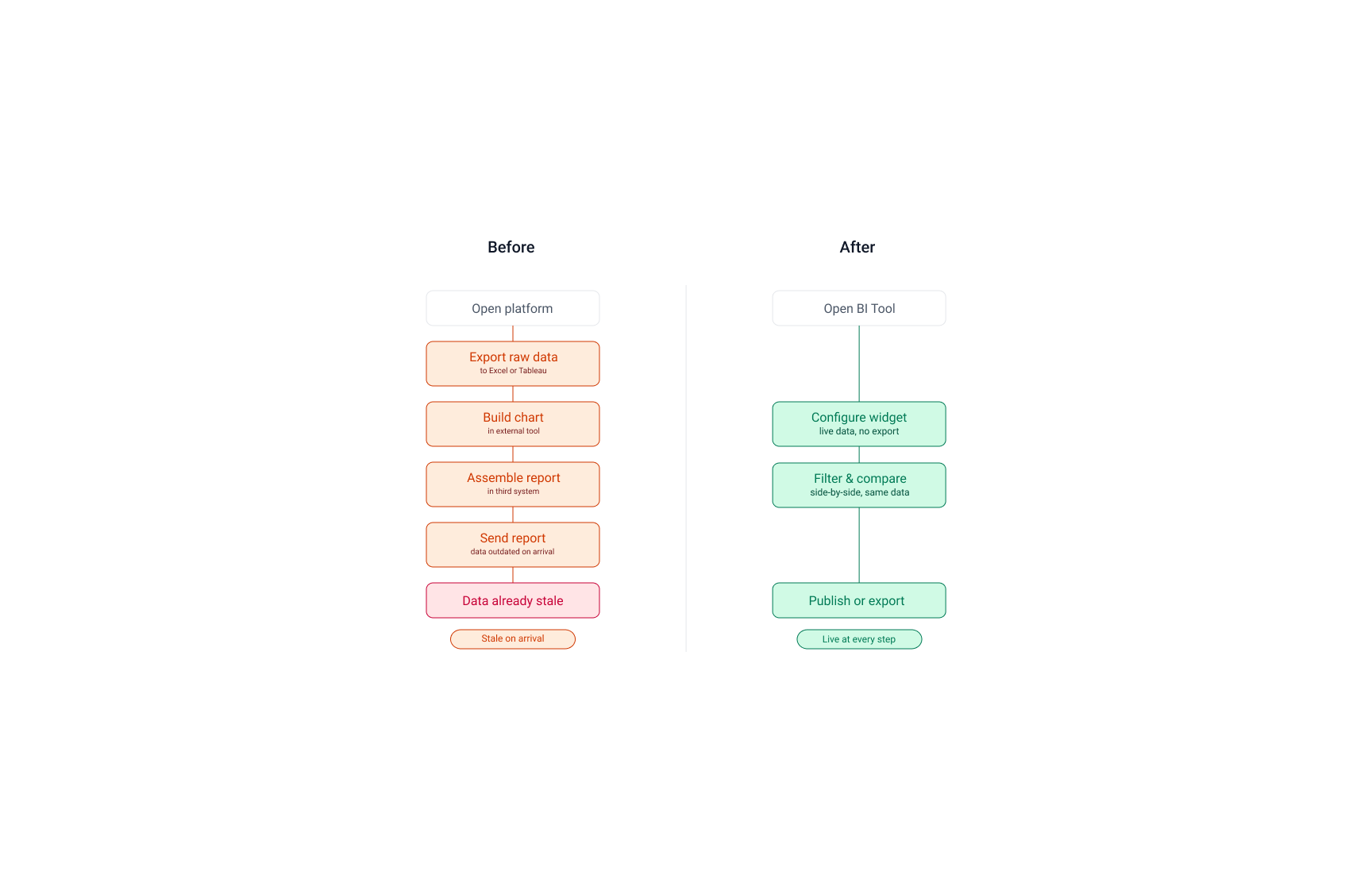
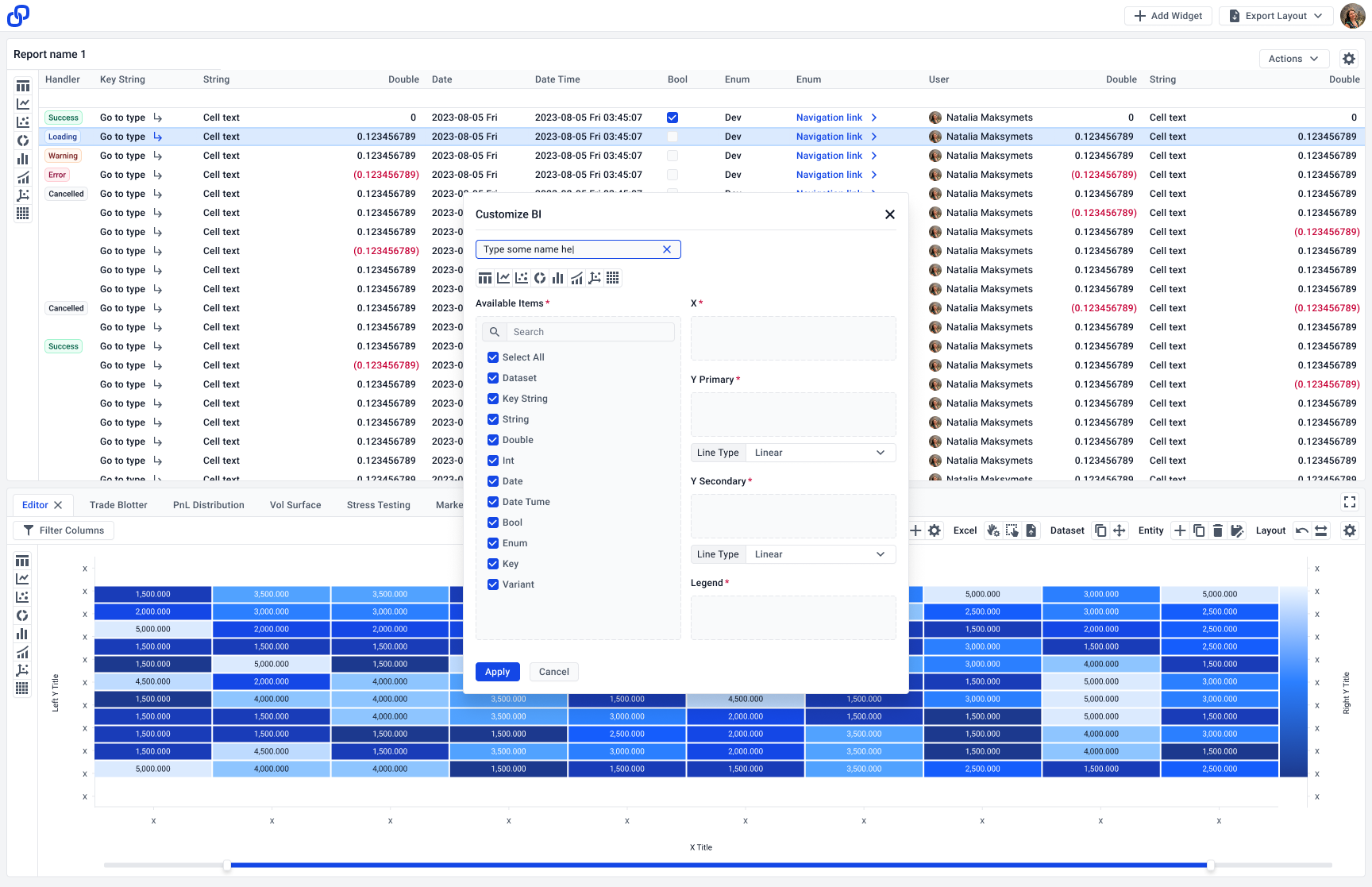
Analysts producing routine deliverables — including daily risk reports distributed by internal bank mail — operated across three disconnected tools. Data in the platform. Charts in Tableau or Excel. Reports assembled in a third system. By the time the chart was built and the report sent, the underlying data had already updated. Analysts were reporting on information that was stale before it reached the reader.
Maximum chart flexibility versus decision paralysis for new users.
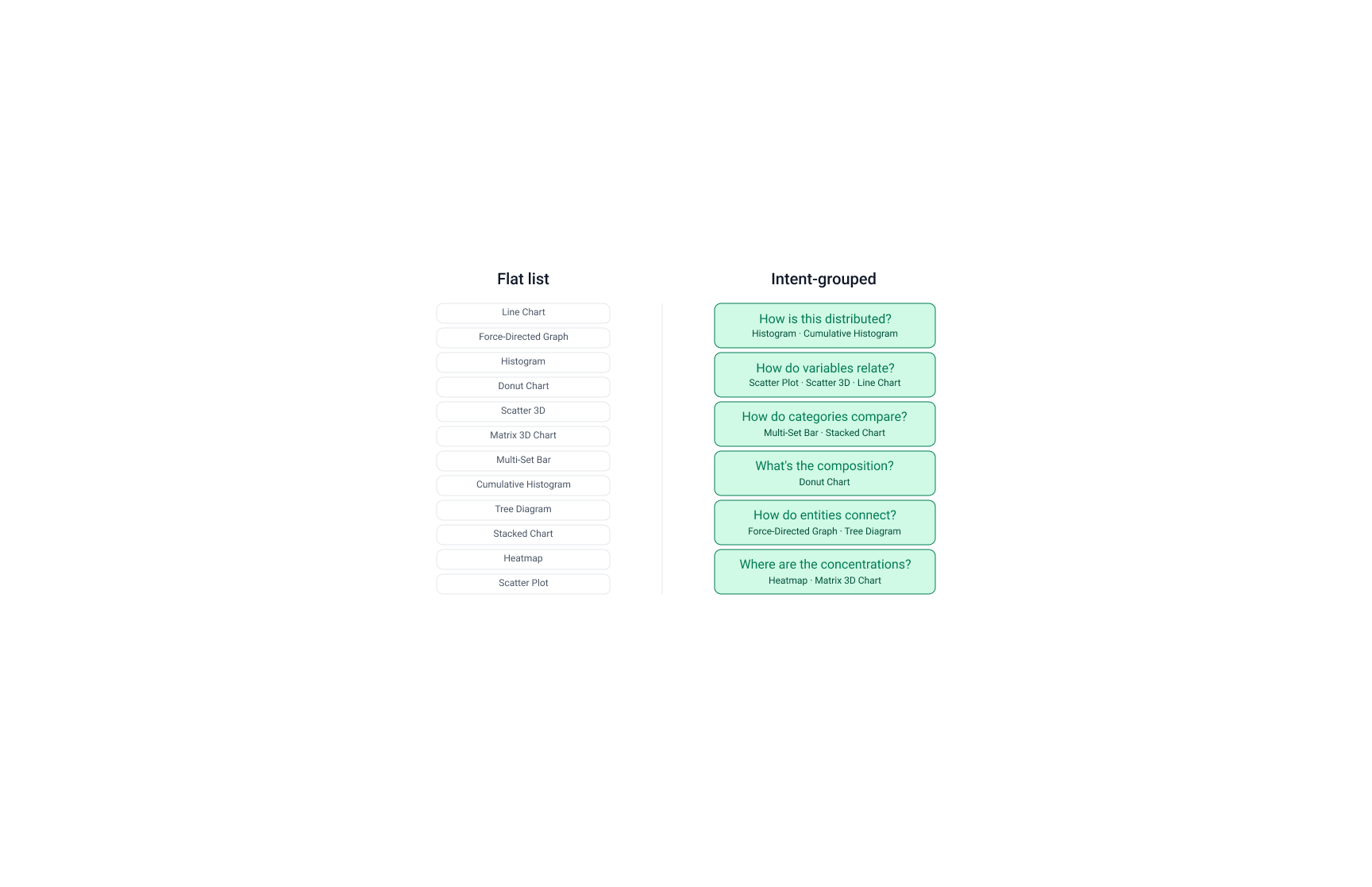
Group chart types by the question the analyst is asking, not by visual format.
Analysts don't think "I want a scatter plot." They think "I want to see how two variables relate." Organising by question reduced configuration confusion without removing any capability.
Data, visualisation, and export live in one place on the same real-time data model.
Adopted as a default component across every deployment, driven by stakeholder demand.
A direct response to repeated client requests, made native to the platform experience.



Custom per client
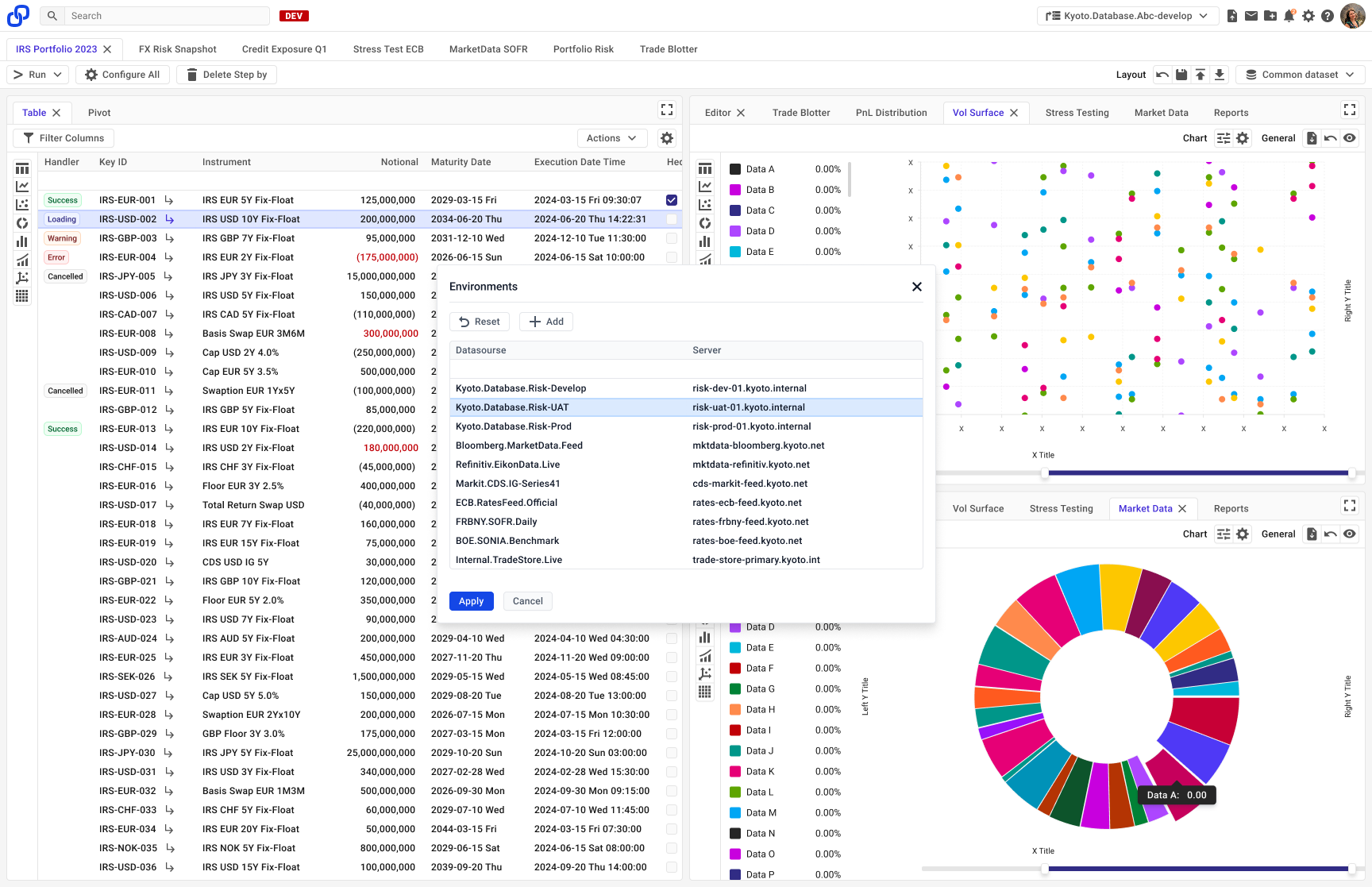
Configure existing components
Clients wanted bespoke features. Engineering couldn't sustain custom builds.
Every request had to fit an existing component or become a universal one.
A one-client feature is technical debt disguised as progress. Grow horizontally.
Third-party libraries
Custom-built analytical layer
Third-party frameworks broke under complex filtering and multi-level grouping.
Build the analytical UI layer in-house, purpose-designed for financial workflows.
Standard tools fail where financial pros work. Custom was the only stable path.
Simplify for the novice
Full density on demand
New users need clarity. Expert users need immediate power.
Every tool opens in summary state, expands to full detail on demand.
Simplifying for novices removes power experts need. Progressive disclosure serves both.
Engineering teams partnered with across the ecosystem.
Central Banks, derivatives dealers, and global asset managers.
One design language, multiple branded contexts.
Analyst workflow time on the Pivot Table engine, in minutes.
A PM could configure a product-ready demo in hours — assembling existing components without touching design or engineering.
What previously required months of iterative design was reduced to a single one-week configuration — repeatable across every engagement.
Design capacity scaled through the system architecture — not through hiring. One team, one design language, every product context.
Design decisions were defensible under review — from Central Banks to derivatives dealers to global asset managers.
"The system didn't just reduce costs. It made commitments possible that would otherwise have been impossible."
From graphic and web backgrounds to mid-level product designers — through structured feedback, portfolio reviews, and career development.
Working sessions with CEO and C-level to bridge business direction and engineering capacity — every architectural decision made with engineering in the room.
Reducing design-to-engineering handoff friction across the full product portfolio — one design language, multiple branded client contexts.
Visual craft. Client work. Limited exposure to product systems.
Component thinking. Cross-functional collaboration. Framework fluency.
System ownership. Stakeholder-facing. Autonomous project delivery.
The design brief for a Risk Manager is not "make it easy" — it's "get out of my way." Simplifying for the novice removes power the expert needs. Respecting the expert removes friction the novice never had.
The choice to design for reuse instead of custom is architectural — made at the design layer, not inherited from engineering constraints. Every component either scales horizontally or becomes technical debt.
C-level stakeholders don't judge design by the vision. They judge it by whether it survives contact with engineering, compliance, and clients. Every polished mockup is a hypothesis until it ships.
Design defensibility matters as much as design quality. A mislabelled column, an ambiguous state, a delayed refresh — each carries real-world consequences beyond user friction.